
Bay Area charging guidance
Charging an EV is easier than you think
Most driving is covered overnight at home. Public fast charging is mostly for road trips, not everyday charging.
Start here
120V outlet
Level 1
Normal household plug. Slowest and simplest, and it works when the car sits for long stretches.
240V home
Level 2
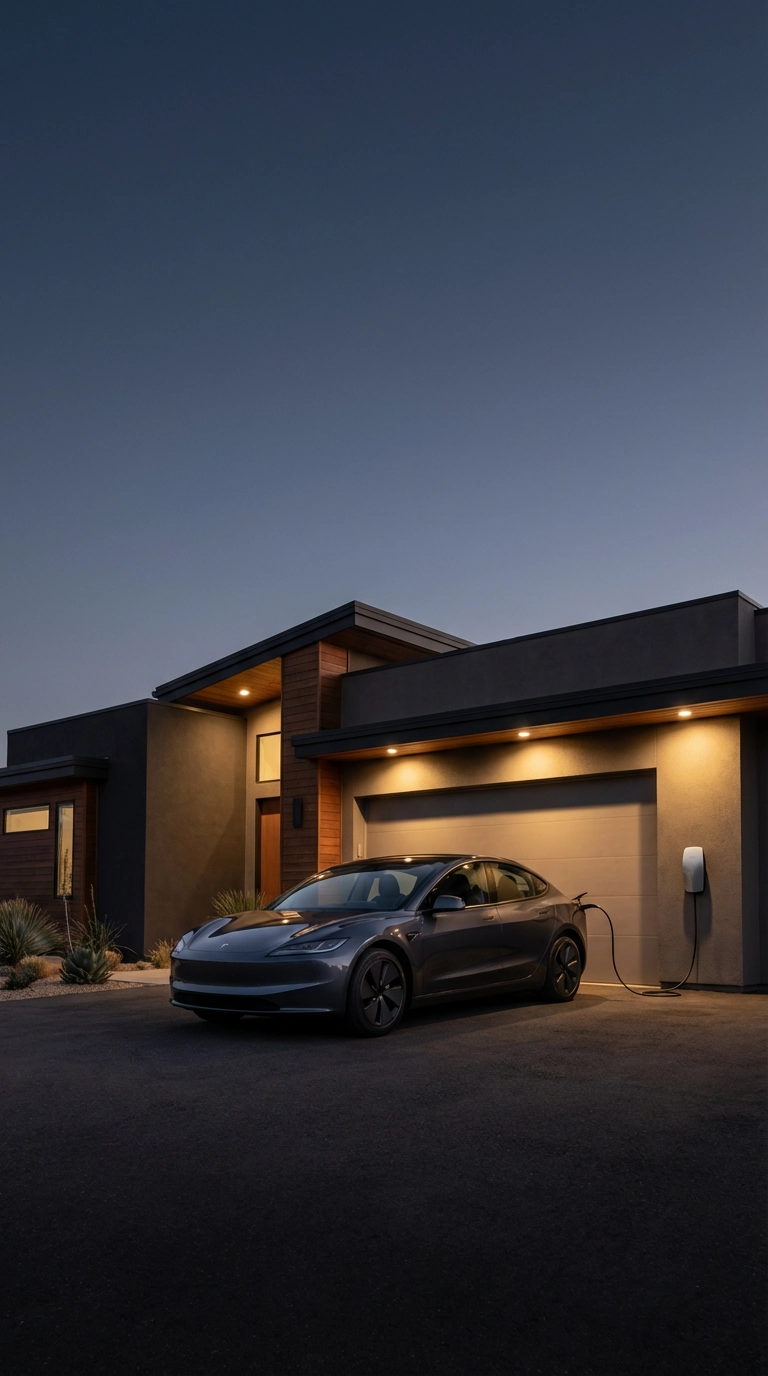
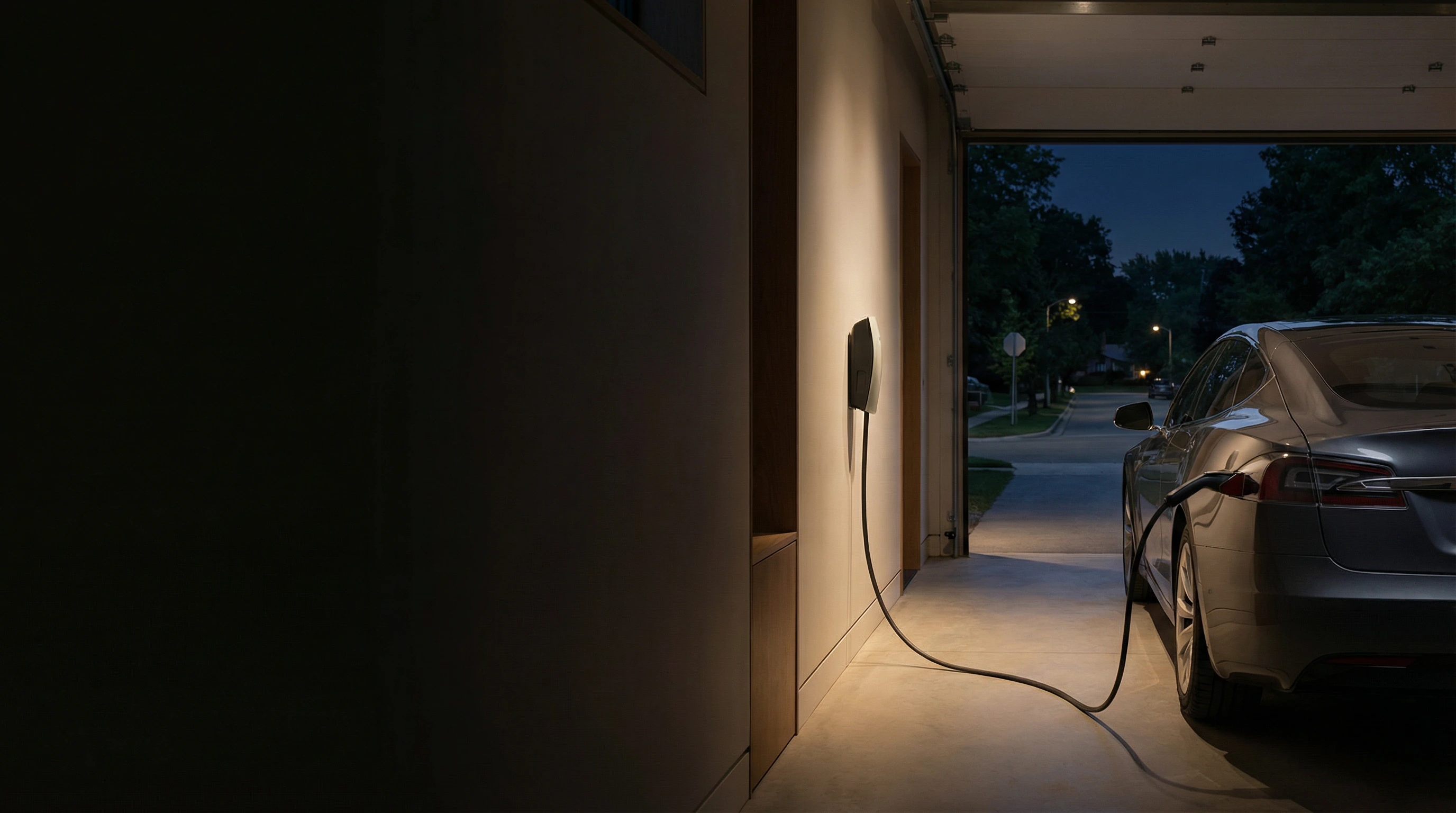
Typical home setup. Overnight plug-in; most daily driving never needs a public stop.
Public
DC fast
Road-trip and quick top-ups. Handy when you are far from home, often at a higher per-kWh cost.
Which one fits your lifestyle?
Choose the situation closest to yours. We show one path at a time.
Reference
The charging types behind the recommendations
Quick labels for what you will hear in the showroom: home charging first, fast public charging when you are on the move. The DOE commonly cites about 5 miles of range per hour on a regular 120V outlet; 240V home charging is the usual upgrade; DC fast is for stops away from home.
Sources: DOE: charging at home · AFDC: connectors and basics
Which charging fits me?
Do I actually need anything installed at home? If you have a dedicated parking spot, a normal outlet you can reach safely, and modest daily miles, Level 1 might be enough to start. If you want predictable overnight fills or drive more, Level 2 is usually worth it. DC fast charging does not replace home charging for daily life; it complements it.
Can my house handle it?
Standard outlet vs 240V: Level 1 uses a normal household circuit; long-term use should be checked for circuit suitability (DOE). Level 2 equipment typically uses 208/240V (similar to an electric dryer circuit) and usually needs a dedicated circuit installed by an electrician.
When panel capacity matters: Older homes or panels that are already full may need a review before adding a 240V circuit. Many installs are straightforward; some need a panel upgrade. Either way, it is a known, solvable project, not a mystery.
Ask an electrician: A short site visit beats guessing from photos online. Bring your vehicle’s max charge rate and where you park; they will size the circuit and talk permits.
PG&E rates: peak, off-peak, and why midnight matters
Many Bay Area homes are on time-of-use pricing: electricity costs more during peak hours (often late afternoon and evening) and less overnight (and on some EV plans, during lower-demand midday hours too). PG&E highlights residential EV plans (such as EV2-A) where charging outside peak, often overnight, can cost much less than charging while the grid is busiest. Always confirm the exact windows on your plan sheet or in the calculator below.
Simple example: the same miles use the same kWh, but off-peak kWh can be noticeably cheaper than peak kWh, so scheduling charging (or using a smart charger) can show up on your bill.
- PG&E: EV savings calculator (rates) (personalize EV2-A vs other plans)
- PG&E: electric vehicle rate plans (official plan details)
- PG&E: charging your electric vehicle at home
Monthly cost vs gas
Plug in rough miles, where you charge, and a PG&E-style rate assumption. This is a conversation starter, not tax or utility advice.
Monthly cost vs gas
Rough estimate only, not a quote. Rates change; your real bill depends on your plan, season, and usage.
Illustrative; PG&E EV time-of-use plans reward charging after peak.
~243 kWh / month at this driving level
~$58 / month charging (illustrative)
vs ~$153 / month gas at 28 MPG and $4.75/gal
Charging time (rough)
Level 1 uses ~5 miles of range per hour as a common rule of thumb (U.S. DOE). Level 2 and DC vary a lot by car, charger, and battery state. Treat this as a ballpark.
About 32 mi/hr
Ballpark time: 3.1 hours
What most owners rely on for everyday charging at home.
Road trips and public charging
“Can I drive to Tahoe?” For most modern EVs, yes, with a little planning on where to fast-charge along the route. Home charging still covers the bulk of yearly miles; fast charging is for the long legs.
“What if I forget to charge?” You will use a public Level 2 or DC station, pay a bit more per kWh than at home, and learn your buffer. It happens, and it is why networks exist.
“Do I need Tesla chargers only?” No. Networks and connector types vary by vehicle; adapters and native support change over time. The AFDC summarizes broad Level 1/2 compatibility and evolving fast-charge connectors (including Tesla / NACS context).
What most owners actually do
- Plug in at home overnight (or whenever the car sits).
- Wake up with enough range for the day.
- Use fast charging mostly on trips, not every grocery run.
- Stop thinking about charging every single day once the routine clicks.
Myths vs reality
Myth: I need a fast charger at home.
Reality: Most people do not. Level 2 is the common home setup.
Myth: I will definitely need a panel upgrade.
Reality: Sometimes yes, often no. An electrician tells you quickly.
Myth: I will live at public chargers.
Reality: Most charging happens at home; public fills in the edges.
Myth: Off-peak does not matter.
Reality: On PG&E-style TOU plans it can matter a lot.
Myth: Battery range vanishes overnight.
Reality: Real-world loss is nothing like the scary stories.
FAQ
Is Level 1 ‘enough’ forever?
It can be enough for low miles and long plug-in windows. Many owners still move to Level 2 for speed and peace of mind, especially in winter or with two EVs.
Wall charger vs NEMA outlet?
A hardwired wall unit can look cleaner and add features (scheduling, metering). A 240V outlet plus a portable cord can be flexible if you move. Your electrician can price both.
Indoor vs outdoor install?
Outdoor-rated equipment exists; weather and cable routing matter. Installers handle enclosures and code requirements every day.
Will charging hurt my battery?
Modern cars manage charging carefully. Daily charging to a comfortable level (not always 100%) is normal; check your owner’s manual for the brand’s simple guidance.
Why is public charging more expensive?
Stations pay for equipment, maintenance, and demand charges. You are buying convenience and speed, not the same economics as your garage.
Installation: keep it practical
- Wall-mounted EVSE vs 240V outlet: both are common; pick with your electrician.
- Indoor and outdoor installs both work when equipment is rated for the location.
- Permits and inspection may be required; good installers build that into the job.
- Smart chargers can align charging with off-peak windows on PG&E-style rates.
- ENERGY STAR lists certified chargers with efficient standby use, handy when comparing models (ENERGY STAR EV chargers).
We can connect you with a local installer when you are ready. Ask us when you pick your vehicle.
Installer-ready checklist
Print or save this list for your electrician. It stays high-level on purpose.
- Where will the charger or 240V outlet live (indoor wall, garage, carport, driveway)?
- Approximate distance from electrical panel to the parking spot
- Panel space for a dedicated circuit (your electrician confirms)
- Whether you want a hardwired wall unit or a 240V outlet + portable cord
- Wi‑Fi / smart scheduling features (optional) and whether your utility offers time-of-use rates
- Local permit and inspection requirements (your installer usually handles this)
- Photos of your panel label and parking area (helpful for quotes)
Utility and local incentives
Programs change often. Watch for utility rebates on chargers, panel-upgrade incentives, income-qualified offers, and federal tax credits where they apply. We keep this section short on purpose, so verify dates and eligibility on official PG&E, state, and IRS pages before you buy.
Bay Area guidance, from people who sell EVs every day
We focus on PG&E-style examples because that is who most of our customers have at home. If your panel, rental rules, or commute are unusual, ask us before you buy. We would rather set expectations than surprise you after delivery.
Need help figuring out home charging?
Tell us your housing situation (house, condo, rent), approximate commute, and whether you already have 240V in the garage.
Ready to pick a car?
Browse inventory or tell us what you are looking for. We will factor charging into the recommendation.